
STAAR 2024 Annual Report
Main Content
Executive summary
The Swiss Transparency Agreement on Animal Research (STAAR) was launched in 2022 with the aim of providing a framework for the signatory organisations to foster communication and transparency surrounding their use of animals in research. The 26 signatory organisations agree to communicate openly about their use of animals in research or their support of such research. Moreover, they undertake to engage with the public and the media, to create opportunities for the public to learn more about animal research, and to report on their progress in improving transparency. To guide these efforts, four clear goals, the STAAR standards, were set for the 2022–2024 period.
This annual report provides information on the transparency-enhancing activities pursued in 2024 by the 26 STAAR signatories, which include 14 institutions that perform animal research (PARs) and 12 that support animal research (SARs). The report is based on responses to a survey developed by a STAAR working group; the individual responses are illustrated with real-life examples to encourage even greater openness throughout the scientific community.
Highlights from 2024:
1. Strong Commitment across Institutions: All 14 PAR and 12 SAR organisations contributed to STAAR in 2024, with more than 90% of PARs and the majority of SARs engaging in transparency activities such as facility tours, internal newsletters, public lectures, and digital communication campaigns. These efforts are evidence of a widespread and structural commitment.
2. Implementation of STAAR Transparency Standards: In 2024, 12 of 14 PARs published detailed figures on the number and species of animals used in experiments. 5 of these also shared data on the severity of procedures, which further enhances transparency. Additionally, 3 SARs provided data or summaries about animal use in supported projects, marking a significant increase over previous years.
3. Communication on the 3Rs Principle: The report documents how 14 PARs and 9 SARs actively communicated on the 3Rs (Replacement, Reduction, Refinement) via their websites, newsletters, and social media posts. The institutions reported organising or participating in 3R-focused events, including public conferences and internal awards to recognise progress in refining animal procedures. This broad promotion reflects a strong institutional commitment to the 3Rs principle.
4. Open Facilities and Targeted Outreach: 12 PARs opened their facilities to external groups, including school classes, journalists, politicians, and other professionals. These visits were conducted in the form of structured programmes such as scheduled tours or educational collaborations, providing visitors with a first-hand experience of animal welfare and technical standards in research environments.
5. Education Integrated across Institutional Levels: As part of formal training programmes for students and staff, 11 institutions offered courses on animal ethics, legislation, and the 3Rs, including more than 20 unique course offerings across Switzerland.
6. Innovative Public Engagement Activities: In 2024, at least 16 STAAR members participated in external events such as local presentations, science fairs, and university open days. Another 11 reported collaborations with schools, including science sessions and facility tours with the aim of making animal research more tangible and accessible to the public.
7. Transparency about Sensitive Issues: A growing number of institutions, twice as many as in 2023, provided information about euthanasia methods, necropsy rooms, and statistics on animals not used in experiments. The publication of this information goes beyond the simple reporting of standards and demonstrates a strong commitment to transparency on the part of STAAR members.
8. Multi-Channel Digital Communications: Institutions actively used LinkedIn, X, Instagram, Facebook, and YouTube to publish news, videos, and explainer content related to animal testing. Several institutions also explored new platforms such as Threads, signalling a willingness to meet audiences where they are and make science more accessible.
9. Cultural Change towards Empowered Dialogue: The report documents that PARs increasingly offer a wide range of supportive measures to encourage researchers to communicate more effectively with the public about their research and their rationale for using animal models.
Animal Research in Switzerland
Switzerland is an international leader in pharmaceutical, biotechnology, and basic research, with a dense network of universities, hospitals, and companies driving innovation in the life sciences. To maintain its position in education, healthcare, and research, Switzerland relies on cutting-edge scientific research, which, in certain areas, still requires the use of animals. Despite major advances in alternative methods, animal research remains vital in many fields, including biomedical research and veterinary medicine. These studies contribute directly to improving human and animal health, promote better understanding of complex biological processes, and support the development of new therapies and vaccines.
Researchers carefully select the most appropriate model for each scientific question, using alternative methods such as computer simulations or cell cultures whenever possible. In some cases, however, studies in living organisms are needed to capture the complexity of biological systems such as interactions between organs or responses to environmental factors. Although Swiss law does not explicitly require drugs to be tested in animals before approval, animal studies are implicitly necessary to meet the scientific standards demanded by Swissmedic and international regulatory frameworks.
Animal research has evolved significantly in recent decades. The use of genetically modified animals, in particular mice, rats, and zebrafish, has become widespread since the 1990s, while precise techniques such as CRISPR/Cas have brought about major advances. At the same time, public awareness of animal welfare has grown steadily. Switzerland was one of the first countries to adopt a specific animal welfare law in 1978, and the relevant legal frameworks have been strengthened ever since. Today, strict rules govern every aspect of animal research – from facility licensing and researcher training to mandatory ethical reviews and inspections. In addition, institutions must appoint dedicated animal welfare officers, and all researchers are required to undergo specialised training and continuing education.
A central pillar of Swiss animal research is the 3Rs principle: Replacement, Reduction, and Refinement. First proposed in 1959, this approach is now enshrined in law and widely implemented throughout the research sector. It requires that animals are used only when there are no alternatives, that the number of animals is kept to a minimum, and that procedures are designed to minimise pain and distress. National initiatives such as the 3R Competence Center (3RCC) and the Swiss National Science Foundation “Advancing 3R” programme aim to accelerate the development and use of alternatives.
Public interest in the use of animals in research has increased significantly in recent years. This attention and the related concerns have resulted in several popular initiatives aimed at restricting or entirely banning animal research. Although none have passed at the ballot box, they have sparked significant public debate and motivated the research community to communicate more actively and transparently. As a result, a stronger culture of openness and ethical awareness has emerged in the scientific community, and researchers are increasingly engaging with the public to explain the purpose, methods, and significance of their work.
A new petition calling for the phasing out of harmful animal experiments has been submitted to the federal government, and another popular initiative to ban all research involving animals has recently been filed. While these developments reflect legitimate societal concerns, it is vital they are balanced against Switzerland’s need for scientific progress, medical advancement, and competitiveness. Continued support for responsible animal research and welfare based on transparency, ethics, and innovation is essential for ensuring that Switzerland remains at the forefront of global science and healthcare.
In 2022, swissuniversities launched the Swiss Transparency Agreement on Animal Research (STAAR) to increase transparency on the use of animals in research. STAAR brings together leading academic and research institutions committed to open and honest communication with the public about why and how animals are used in science. The goal is to encourage the organisations to make information about animal research more transparent and accessible, thereby promoting greater understanding across society. STAAR also helps coordinate communication efforts across Switzerland to ensure that best practices are shared and built upon. By reporting annually on activities and progress, each member organisation contributes to identifying where improvements are possible and where challenges remain. Through STAAR, Switzerland takes a proactive approach to ensuring that animal research is not only scientifically rigorous but also socially responsible and publicly accountable.
Brief history of STAAR
During the campaign for the federal popular initiative 2022 for a total ban on animal research, which was rejected by 79.1 percent of the population, many Swiss researchers realised there was a need for greater transparency and proactive engagement with the public about why and how animal research is conducted in Switzerland. To support institutions in their efforts towards greater transparency and increased public dialogue on the use of animals in research, swissuniversities established the STAAR Commission. It should be noted, however, that discussions on promoting and coordinating efforts to increase transparency in animal research were initiated long before STAAR. The creation of STAAR therefore reflects a desire to improve transparency and foster engagement with the public by building on strategies and activities that many institutions have been practising for some time.
In 2019, the Research for Life Association, in collaboration with the University of Zurich and other institutions, proposed a national transparency agreement on animal research. The project was further developed by the Swiss Academies of Arts and Sciences before being transferred to swissuniversities. Inspired by transparency agreements existing in several European countries, two workshops and intensive discussions within a swissuniversities working group led to the drafting of a concept for STAAR under the umbrella of swissuniversities, which was then set out and adopted in November 2021 by the Chamber of Universities of swissuniversities. At the same time, STAAR was established as a commission of the Chamber of Universities.
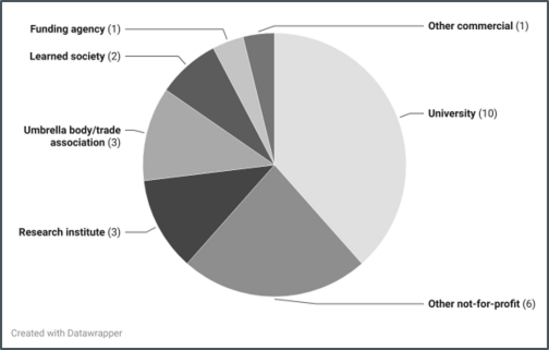
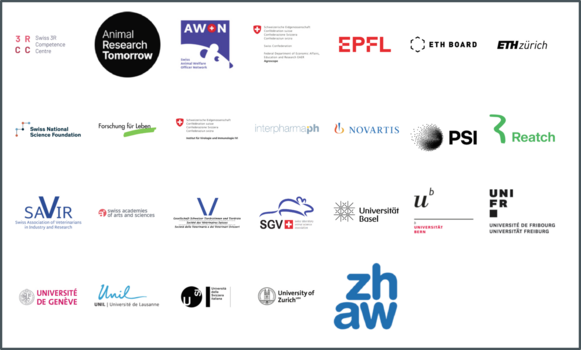
STAAR unites public and private organisations that either perform animal research (PARs such as public research centres and pharmaceutical companies) or support animal research (SARs such as professional societies, animal welfare organisations, and funding agencies). STAAR activities are planned and carried out by two bodies: the Plenary Assembly, composed of representatives of all STAAR members, and a Working Group, which consisted of 11 people in 2024. One member institution is designated as the lead institution and represents STAAR at the national level. The first STAAR report, to which all members contributed, was released in December 2023. In 2024, the following 26 institutions (14 PARs and 12 SARs) were STAAR members, with the EPFL acting as lead institution:
Commitment 1: We will be clear about how and why we use or support the use of animals in research.
This Commitment seeks to ensure that all organisations communicate and are transparent about their use, or support for the use, of animals in research, both internally and externally. All signatories agree to these basic principles of openness, which underpin the entire transparency agreement.
Commitment 2: We will enhance our communication with the public and the media about our involvement with research using animals.
The purpose of this Commitment is to ensure that relevant details about the signatories’ involvement in the use of animals in research are made readily available to the public. It builds on Commitment 1 by outlining some of the steps that organisations can take to facilitate their communications about animal research.
Commitment 3: We will be proactive in providing opportunities for the public to find out about our involvement with research using animals.
This Commitment aims to facilitate informed public discourse about animal research in Switzerland. It builds on Commitments 1 and 2 by suggesting ways in which signatories can engage proactively with the public, above and beyond the provision of information.
Commitment 4: We will report on progress annually and share our experiences.
Monitoring the implementation of the transparency agreement is critical for its success. This Commitment aims to document and communicate the progress signatories have made towards being more open about research using animals in Switzerland and improving the information that is available to the public.
In addition, a list of specific objectives derived from the four Commitments is also defined each year by the Plenary Assembly. These objectives comprise more concrete actions that the signatories agree to pursue and implement; it is expected that the objectives will evolve over time. The following objectives (the so-called “STAAR standards”) were adopted for the period 2023 to mid-2024; the plenary assembly decided to extend them for an additional year, until mid-2025.
2. Communication
When publishing information on a research project that used animals, signatories work towards providing comprehensive explanations of the importance of using animals in this specific case and how experiments on animals contribute to achieving the project. All signatories encourage the use of channels targeting the general public.
4. Explaining animal research
Signatories work towards providing information on the main fields of research at their institution as well as examples of research projects using animals. In the description of these projects, they pay attention to explaining procedures (including euthanasia) and their severity degree.
2024 annual report
Purpose and methodology
The STAAR Annual Report is based on a structured questionnaire distributed to all signatory institutions. This survey is a key tool for monitoring and strengthening communication and transparency surrounding the use of animals in research. By openly reporting their practices, STAAR members demonstrate their commitment to accountability and help build public trust.
The questionnaire, developed by the STAAR Working Group, is based on surveys used by the European Animal Research Association, which originally promoted the concept of transparency agreements. The 2024 version closely mirrors the 2023 version, with targeted updates and additions. In December 2024, the survey was sent to all STAAR signatories for the purpose of compiling the 2024 annual report. The survey results and the final draft of the report were presented at the STAAR General Assembly in June 2025. The final report was approved by the Chamber of Universities of swissuniversities on 22 August 2025.
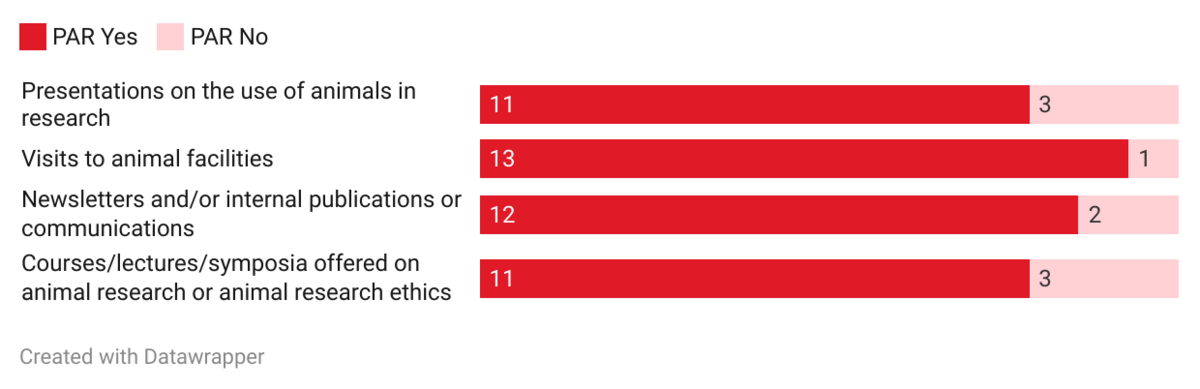
In 2024, almost all of the 14 PARs were actively involved in communication and education activities. 13 offered visits to their animal facilities, 12 published internal newsletters or communications, and 11 held presentations or organised courses, lectures, or symposia on animal research or ethics. Only a small number, between one and three depending on the activity, reported no engagement in these specific areas. These figures show that the majority of institutions meet transparency goals and are firmly committed to informing and engaging with the public. By opening their doors (13 in 2024 compared to 10 in 2023), sharing information, and promoting ethical reflection, they demonstrate that animal research in Switzerland is conducted with a high level of transparency. By proactively communicating the essential role animal research plays in advancing healthcare, knowledge, and innovation, these institutions make a decisive contribution to fostering public trust.
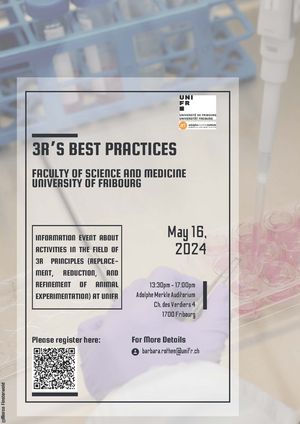
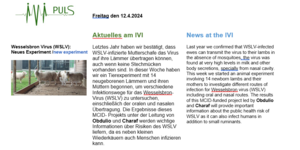
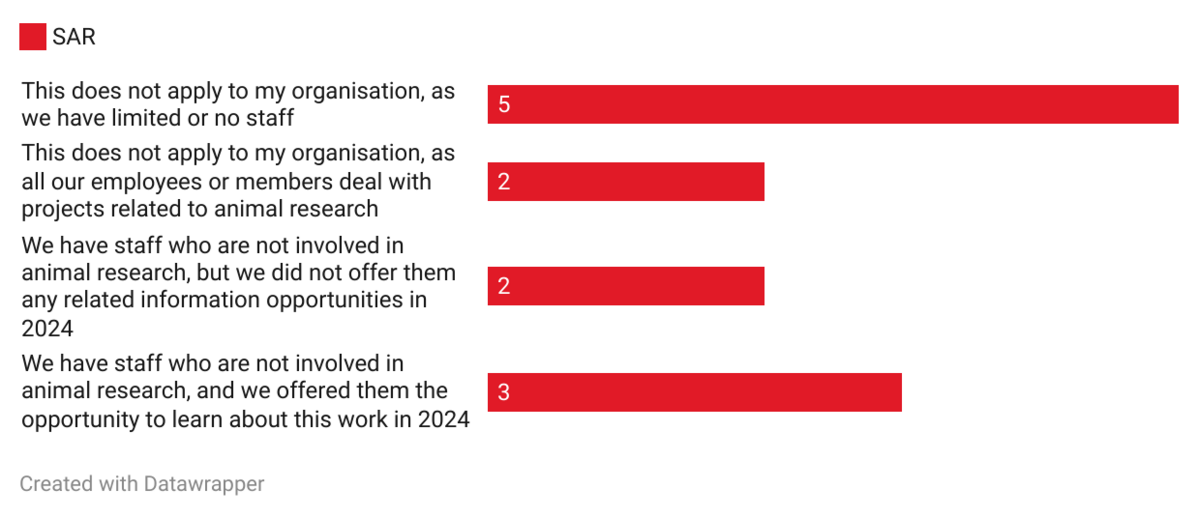
In 2023, 5 of the 12 SARs reported that the question of offering information on animal research to staff did not apply to them due to having limited or no staff (e.g. animal welfare officer network AWO-N). Another 2 indicated that all their staff were directly involved in animal research projects, making additional information offers unnecessary. Of the remaining organisations, 2 have staff who are not involved in animal research and offered no related learning opportunities, while 3 took a proactive approach and provided such opportunities to their non-involved staff.
These results show that although most SARs are less affected by the issue, a notable proportion still sees value in promoting awareness about animal research for staff not directly involved in such work. This suggests a broader awareness within the research-supporting institutions for the importance of internal transparency and shared knowledge to strengthen informed engagement and foster a culture of responsibility surrounding animal research.
Examples:
Swiss National Science Foundation (SNSF): Ethicist and philosopher of science Suzann-Viola Renninger, member of the Canton of Zurich Commission on Animal Experimentation, was invited to give a themed “coffee break talk” for SNSF employees. She discussed and reflected on the functioning and work of this commission.
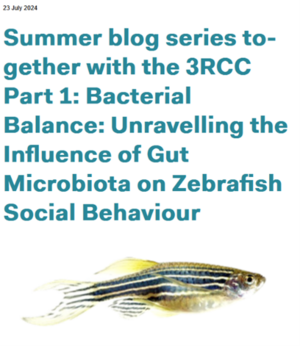
Interpharma: Blog series available on the institution’s website. Link
Please indicate whether, in 2024, your organisation proactively provided the following information to the public as formulated in the 1st and 4th STAAR standards:
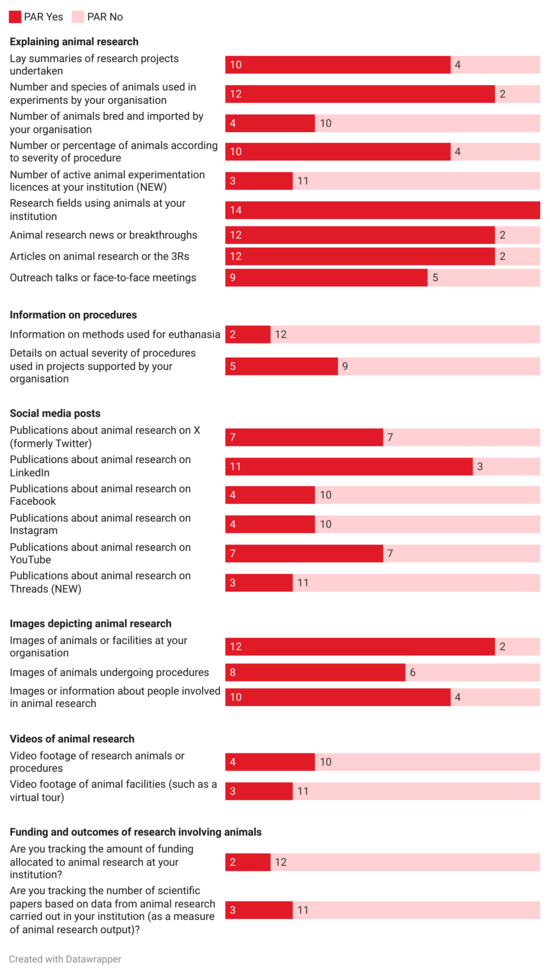
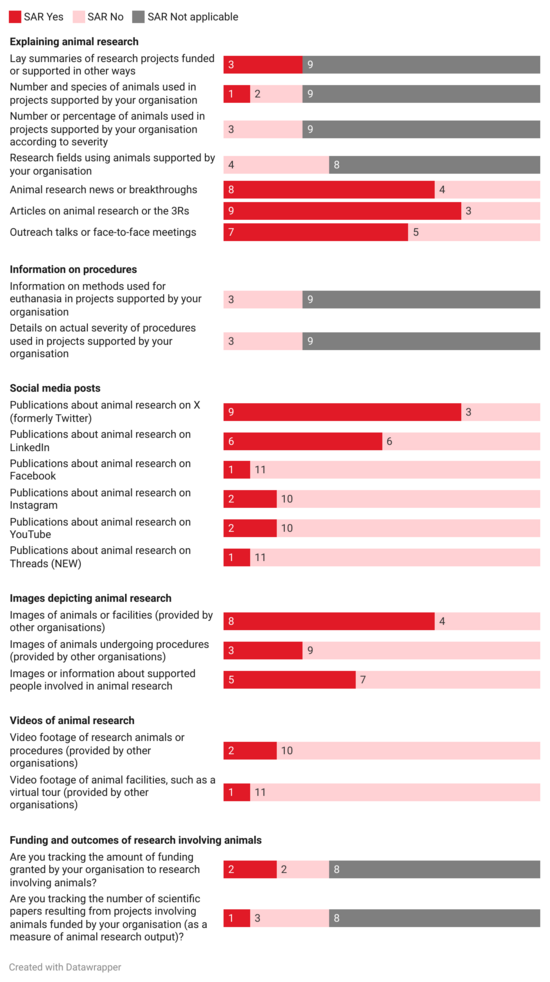
The graph indicates that PARs are increasingly active in providing information to the public. Most institutions already share general information such as lay summaries of their research, the types and numbers of animals used, and relevant breakthroughs. Many also engage in public outreach and post on platforms such as X or LinkedIn. Some institutions provide detailed data on sensitive issues such as the severity of procedures, euthanasia methods, occasionally even showcasing these aspects during facility tours. In addition, some organisations have begun sharing data on animals not used in experiments. When it comes to illustrating animal research, still images are more common than videos.
The findings illustrate a clear trend towards transparency, and the overall willingness on the part of institutions to inform the public, explain procedures, and use social media platforms reflects a growing commitment to openness. The results also underscore the fact that Switzerland’s research institutions respond to public concerns. With continued support and clear expectations, even greater transparency and trust can be achieved without impacting on the high quality and ethical standards of Swiss animal research.
Regarding the findings for SARs in 2024, these institutions showed varying levels of engagement in communicating about animal research, reflecting the diverse nature of their involvement. Some SARs directly support projects involving animals—primarily through funding—while others play a supportive role through non-funding pathways. Among the SARs that provide funding, only a few published lay summaries, species numbers, or severity data for the animals used in supported projects. Similarly, only a minority tracked the funding allocated to animal research or the scientific outcomes derived from this work. As a general rule, however, many shared updates and articles on animal research and the 3Rs, and most SARs were active on major social media platforms, including X, LinkedIn, and Instagram. Nevertheless, very few used images or video content to provide real-life examples of animal research or facilities. These results suggest a growing commitment to transparency, while nonetheless highlighting a need for more coordinated communication practices.
Examples:
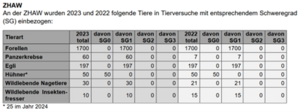
Zurich University of Applied Sciences (ZHAW): Various information and figures on the use of animals in experiments, including the number of animals according to severity of procedure, are publicly available on the institution’s website. Link
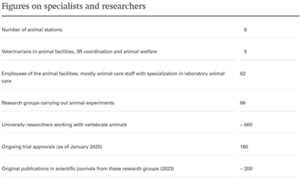
University of Basel: Provides facts and figures on animal research, including the number of active animal experimentation licenses available on the institution’s website. Link
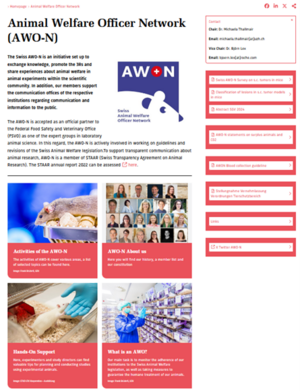
Animal Welfare Officer Network (AWO‑N): The AWO‑N website offers a range of information and links, including images from animals and animal facilities from partner institutions. Link
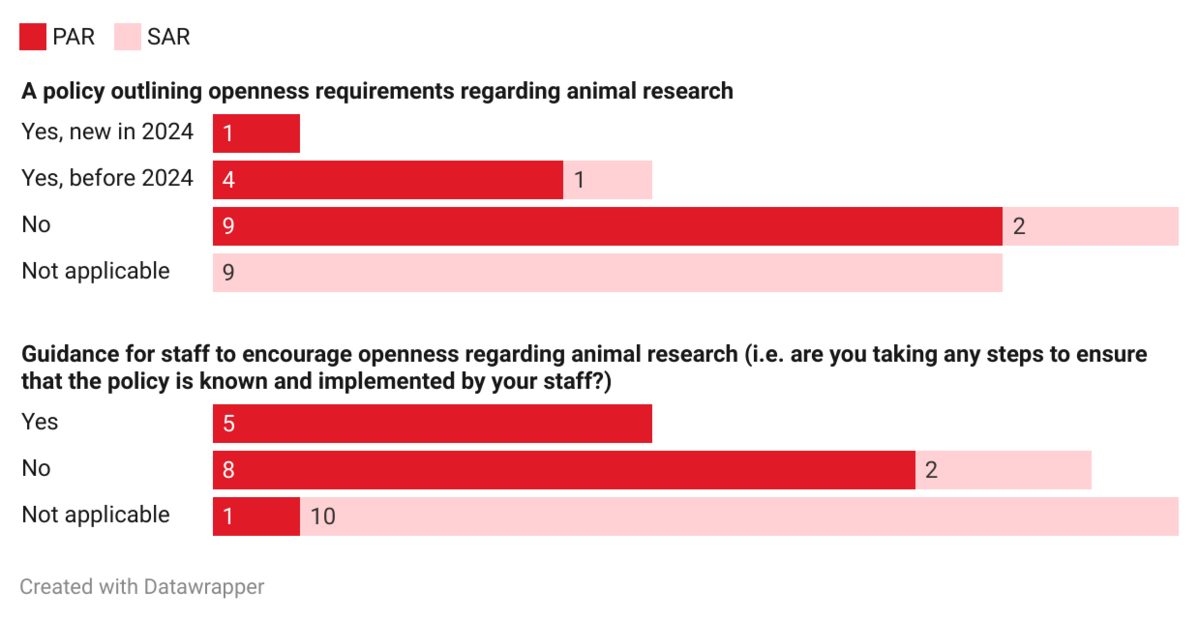
In 2024, several STAAR members took important steps toward fostering openness in partnerships involving animal research. Among PARs, 5 had previously developed a formal policy on openness in communication and 1 introduced a policy in 2024, indicating a growing commitment to transparency. The majority of SARs stated this measure is not applicable to their activities, which reflects their different function in the research landscape. Notably, 5 PARs actively supported the implementation of these policies by providing guidance to staff, helping to embed a culture of openness within their institutions. Although some organisations have yet to adopt formal measures, these results are a positive development. Continued exchange of good practices within the STAAR network has the potential to encourage more members to establish policies and internal structures that promote open and constructive communication about animal research.
Challenges encountered by STAAR members in the implementation of the 1st commitment in 2024
While the 2024 data suggest an encouraging awareness among STAAR members regarding factors that may limit open communication about animal research, challenges nevertheless persist. One noteworthy result is that 10 PARs and 5 SARs reported limited staff capacities and funding.
Lack of expertise in matters surrounding communication was less frequently seen as an obstacle, with only 1 PAR and 2 SARs reporting such difficulties. However, issues such as coordination between communication teams and research departments (2 PARs) as well as limited information flows from grantees (2 SARs) were cited as barriers. These are areas where better internal communications and clearer processes could improve transparency efforts. Notably, 8 PARs reported that researchers’ hesitancy to communicate with the public remains a real concern.
In sum, STAAR members reported several obstacles to implementing the first commitment, naming limited time, financial resources, and insufficient institutional support for public communication as the main challenges. Nevertheless, STAAR members demonstrate a high degree of self-awareness and a commitment to improve, thereby creating a solid foundation for overcoming the various challenges through shared learning and mutual support.
Further examples of the implementation of the 1st commitment:
![[Translate to Englisch:] Figures on animal research from 2023 annual report of the University of Geneva](/fileadmin/_processed_/5/4/csm_UNIGE_Rapport_de_gestion_2023_8ce712cf23.png)
University of Geneva: First-time inclusion of figures on animal use in the main institutional annual report. Link
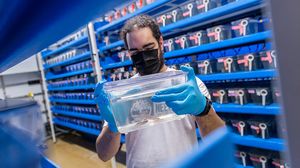
University of Zurich: Website on animal research that portrays several research projects, including pictures. Link
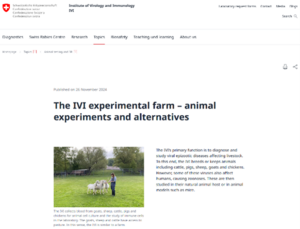
Institute of Virology and Immunology (IVI): Introduction of animal experimentation as a principal topic on the institute website, available in the three national languages and English. Link
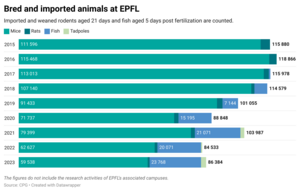
EPFL: First-time publication of the numbers of bred and imported animals, accompanied by an explanation of their purpose. Link
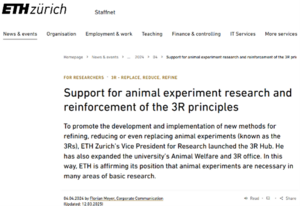
ETH Zurich: Internal news for researchers. Link
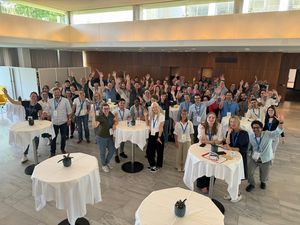
Swiss Association of Veterinarians in Industry and Research (SAVIR): Co-organisation of a two-day continuing education course in June 2024 by SAVIR and the Swiss Association of Veterinary Pathology at the Roche campus in Basel, with around 80 participants. Programme topics included animal models, communication on animal experimentation, and other relevant issues. Link
Did your organisation, researchers, or staff provide any of the following services in 2024, as formulated in the 2nd STAAR standard?
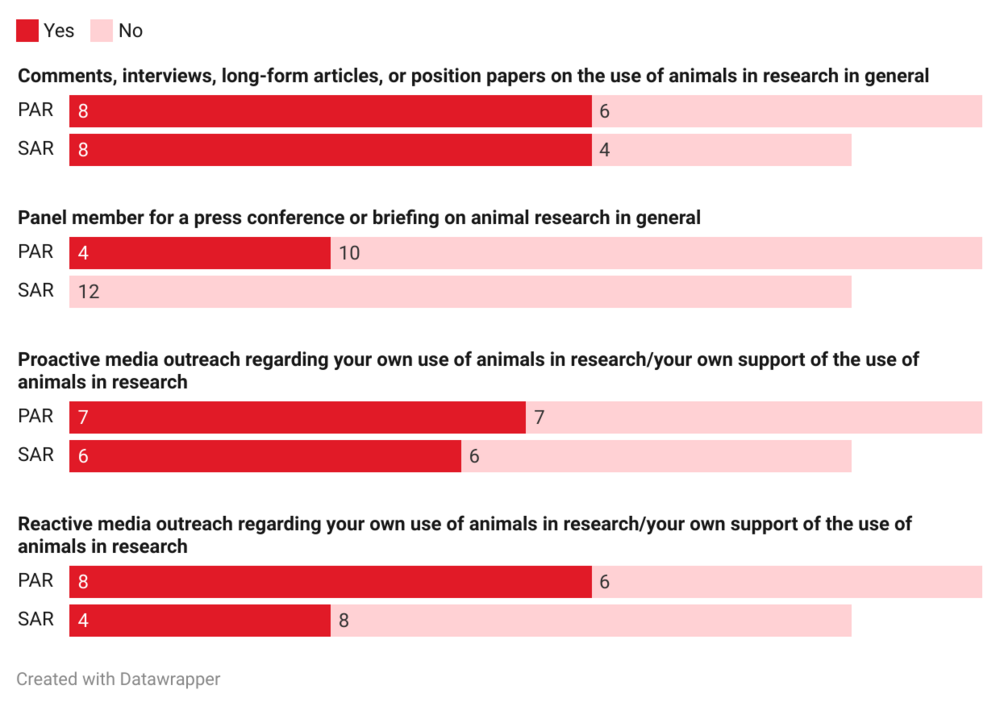
PARs actively engaged in media outreach, notably through public commentary (8 institutions) and reactive outreach concerning their animal research, demonstrating their readiness to publicly advocate for and clarify their work. SAR organisations demonstrated significant involvement, mainly via briefings and interviews. Collectively, these responses indicate that both groups are willing to work with the media and are actively engaging in media activities to support animal research publicly.
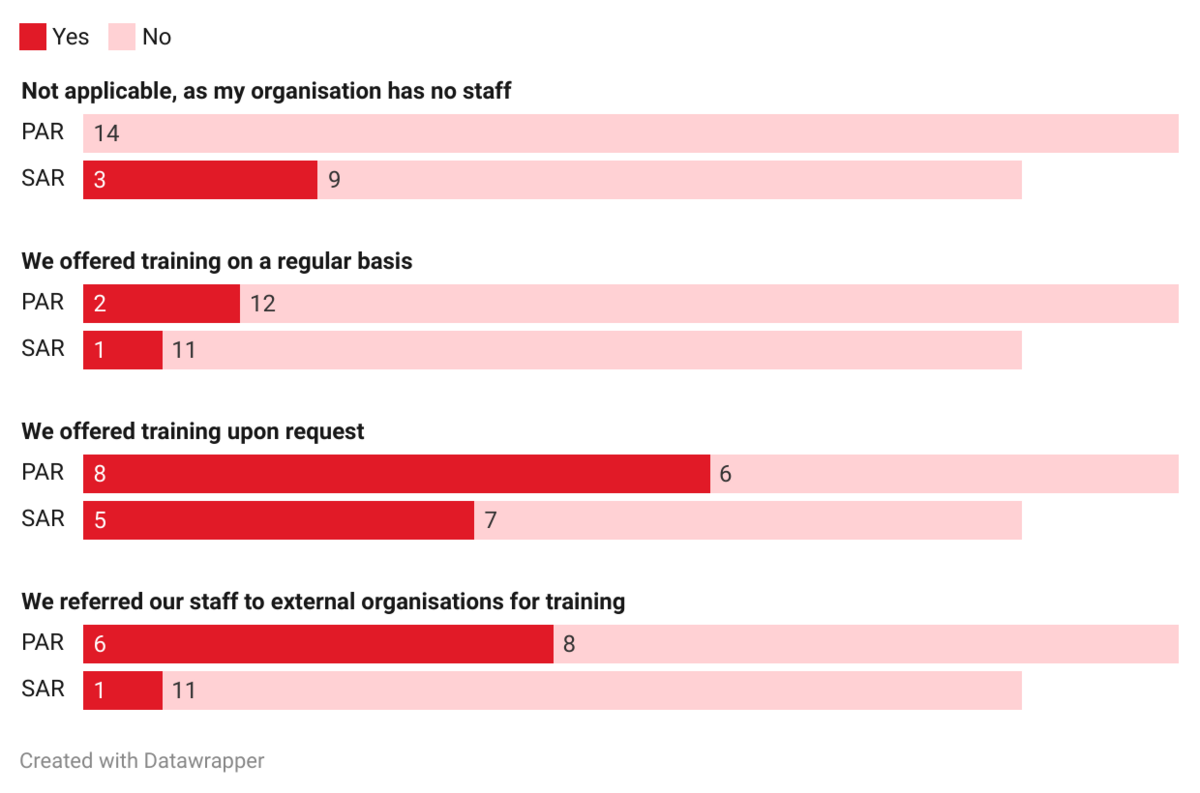
Increasing transparency goes hand-in-hand with encouraging staff to communicate openly and enabling them to improve their communication skills. Only a small number of PARs and SARs regularly offered media training (2 PARs, 1 SAR). Training upon request was more common, as indicated by the responses of 8 PARs and 5 SARs. Referring staff to external organisations for media training was fairly common among PARs (6) but less frequent among SARs (1). Several respondents indicated their organisation had no staff at all (3 SARs). The data indicate that although structured and regular media training tailored explicitly for animal research communication remains limited, organisations respond to individual training needs, primarily upon request. The current percentage of members referring staff to external training courses suggests that organisations acknowledge the importance of media engagement skills but also that they may lack internal resources or the capacity to provide consistent training.
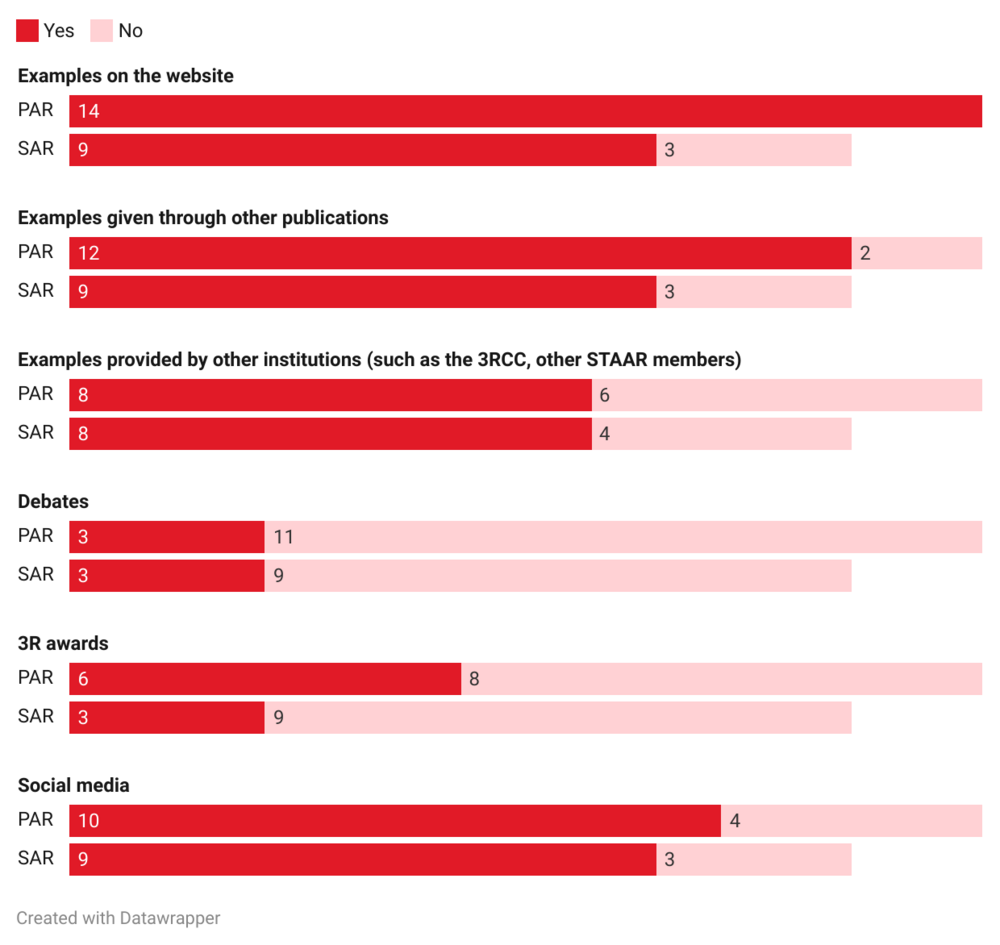
Animal research in Switzerland is guided by the 3Rs, and organisations involved in animal research are expected to communicate transparently about their efforts to uphold the 3Rs. Presenting examples of the 3Rs on organisational websites was the most common method (14 PARs and 9 SARs). Other publications (12 PARs, 9 SARs) and social media (10 PARs, 9 SARs) were also frequently used channels, while promotion through examples from other institutions such as the 3RCC or STAAR members (8 PARs, 8 SARs) was also fairly common. Fewer organisations promoted the 3Rs through debates (3 PARs, 3 SARs) or 3R awards (6 PARs, 3 SARs). The responses show that organisations are actively using multiple platforms, primarily digital (websites and social media), to highlight their commitment to the 3Rs, reflecting a widespread recognition of transparency and public engagement in animal research ethics. While internal examples and examples from other institutions are widely shared, structured, interactive methods such as debates and recognition through awards are less common.
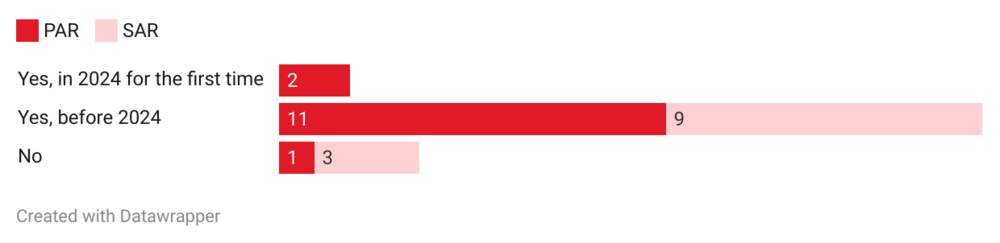
The majority of signatories (20) had already published such a statement before 2024, with a small number (2) publishing their statement for the first time in 2024. Only a minority (1 PAR and 3 SARs) reported that their organisation has no published statement on the use of animals in research; however, they provided extensive information about animal use on their website, and they rewarded communication efforts related to animal research. The results indicate a well-established commitment within the research community to transparency regarding animal research, as evidenced by the vast majority of STAAR members already providing publicly available statements prior to 2024. The continuing emergence of new public disclosures reflects steady progress towards full transparency.
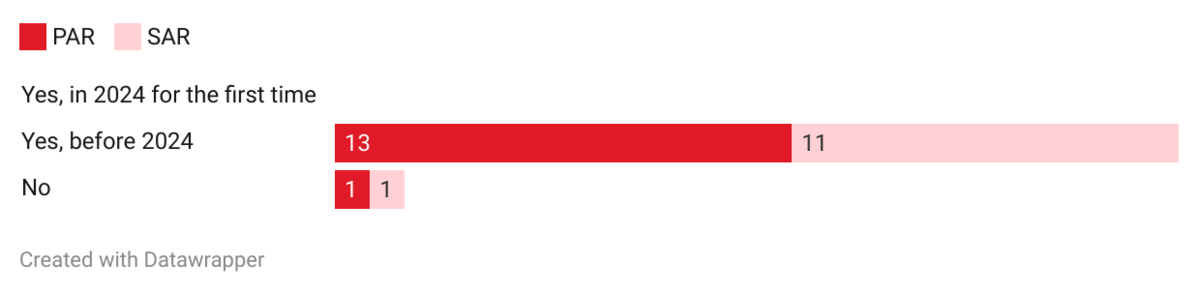
Challenges encountered by STAAR members in the implementation of the 2nd commitment in 2024
Although most respondents (18) stated they faced no obstacles in implementing the second commitment in 2024, 8 members reported challenges. These organisations lacked dedicated animal research communications staff, which slowed communication efforts. Researchers, particularly those involved in animal research, faced administrative overload, making it difficult to mobilise them for outreach activities. In addition, some organisations experienced difficulties in funding their programmes and science communication workshops. Corporate social media policies and a lack of systematic processes for collecting detailed information from grantees were also cited as barriers. These findings show that while most organisations have successfully overcome challenges in implementing transparency commitments, barriers remain for some, suggesting the need for targeted support or resources to facilitate full compliance with the second commitment.
Further examples of the implementation of the 2nd commitment:
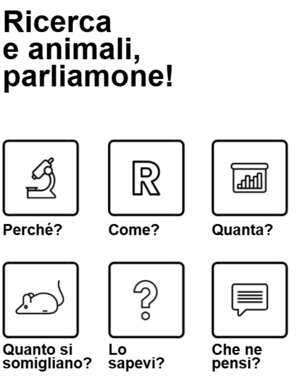
Università della Svizzera italiana: Presentation of an interactive screen featuring 3R content during the open day of the main university institute conducting animal experimentation. Link
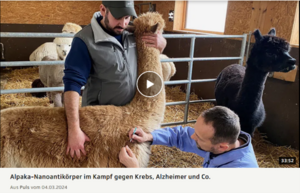
University of Zurich: SRF report on the Nanobody Service Facility and the use of alpacas for nanobody production. Link
ETH Zurich: Video about the rodent facility and the 3Rs. Link.
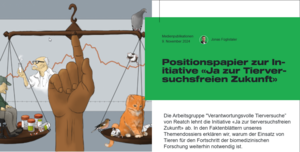
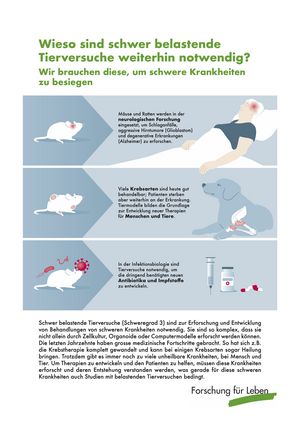
Reatch: Publication of a position paper highlighting the essential role of animal experimentation in advancing biomedical research, protecting patients and the environment, and safeguarding Switzerland’s status as a leading research hub in response to the popular initiative “Yes to a Future Without Animal Testing”. Link.
Animal Research Tomorrow (ART): Transpavet, a SciComm Award-winning project. Link
In 2024, did you engage in discourse on animal research via any of the following formats, as formulated in the 3rd STAAR standard?
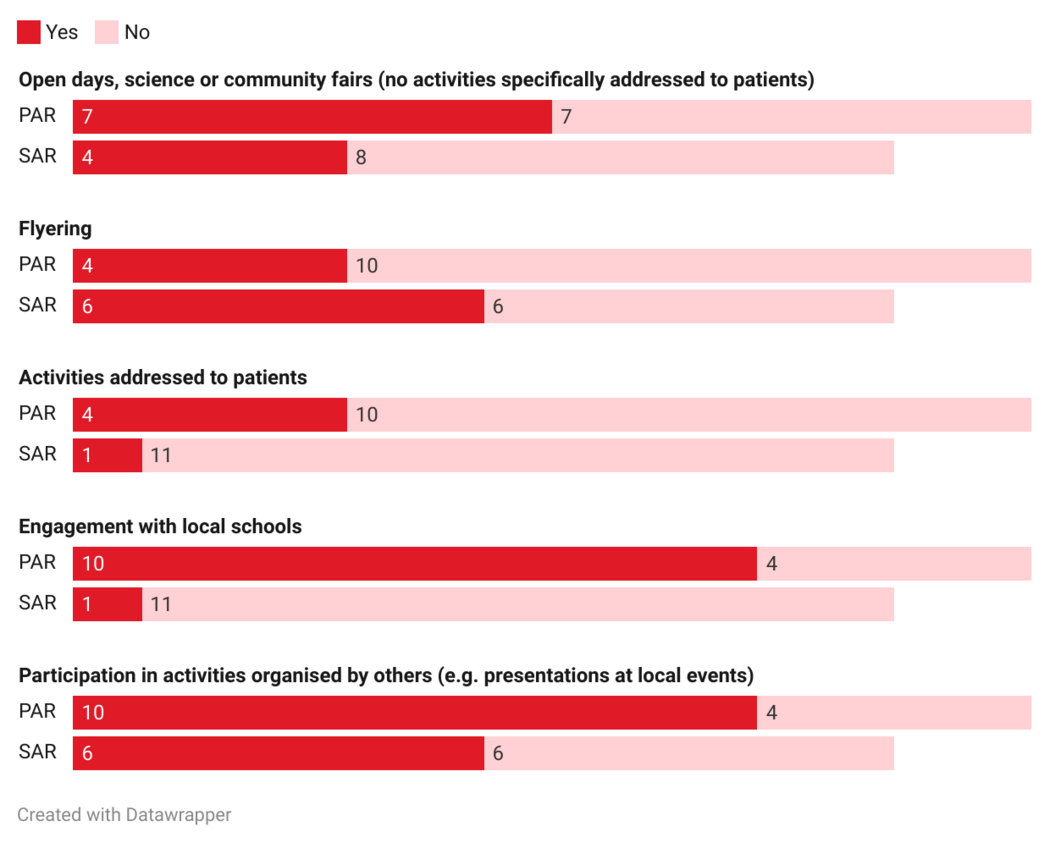
Commitment 3 encourages STAAR members to increasingly create opportunities for the public to learn about their involvement in animal research. In 2024, the organisations actively engaged in various outreach activities related to animal research, as outlined in the third STAAR standard, with particularly strong participation seen in externally organised activities such as presentations at local events (16 total respondents from PARs and SARs) and engagement with local schools (11 respondents, primarily PARs). Several activities took the shape of open days, science fairs, and community fairs (11 respondents total). Conversely, there were very few events dedicated to patients (5) and limited flyering activities (10), although a positive trend is apparent.
Employees received various forms of support for organising public events on the use of animals in research. For events such as the National Information Day on Experimental Animals (NIDEA), researchers were briefed and debriefed before presenting their work. Other institutions shared their experiences, and support was provided to prepare staff for external questions and visits. Some organisers suggested that support from top management, including the provision of funding, increases the attractiveness of booths at public events, and that clear messaging is crucial to prevent misunderstandings.


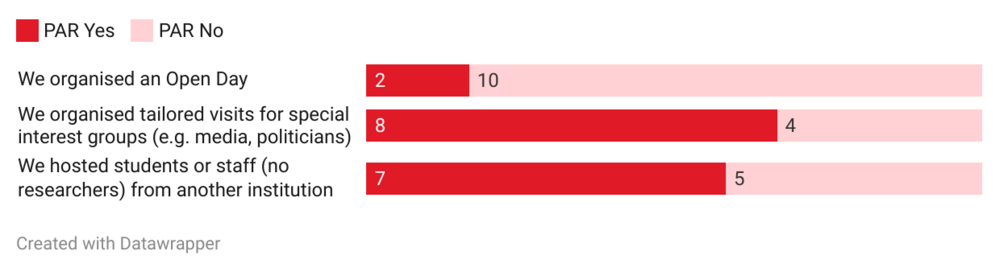
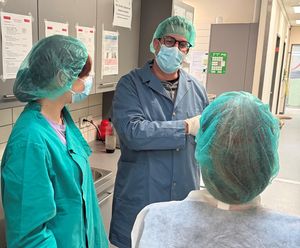
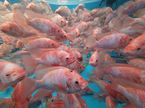
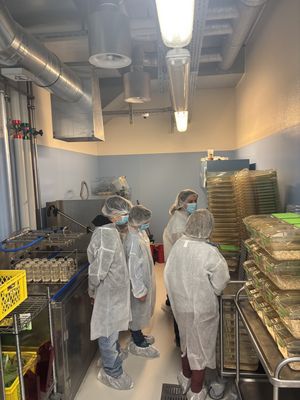
Visits to animal facilities provide an opportunity for the public to see research animals and learn about the animals’ housing conditions. In 2024, most PARs (12 of 14) proactively opened their animal facilities to external visitors in the form of events such as tailored visits for special interest groups, including media professionals or politicians (8 respondents) or students or non-research staff from own or other institutions (7 respondents). However, public engagement through organised open days was uncommon, with only 2 respondents reporting such activities.
Because most SARs do not own animal facilities, the question regarding the opening of animal facilities is not applicable. Nevertheless, in 2024, 1 SAR reported having organised a visit for politicians to one of its members’ animal facilities.

Challenges encountered in 2024 by STAAR members in the implementation of the 3rd commitment
Generating open dialogue about the STAAR commitments is not only a critical step in raising public awareness, but also an opportunity for the public to engage with STAAR members and learn more about their activities related to animal research. When asked if their organisations had faced obstacles in implementing the third STAAR Commitment in 2024, 9 of 26 respondents indicated that they had. Qualitative descriptions of the obstacles suggest the most common challenges concerned limited staff, time, and financial resources, which made organising outreach activities particularly difficult. Other common obstacles included requests for tours on very short notice, lack of public interest, difficulty in accessing facilities, and institutional constraints such as internal communication gaps. The data show, however, that most organisations (17 of 26) experienced few problems in implementing the third STAAR Commitment in 2024, which evidences solid existing capacities as well as a strong commitment to public engagement. It furthermore reflects a proactive mindset and provides a clear indication as to where targeted support can further enhance transparency efforts.
Further examples of the implementation of the 3rd commitment:
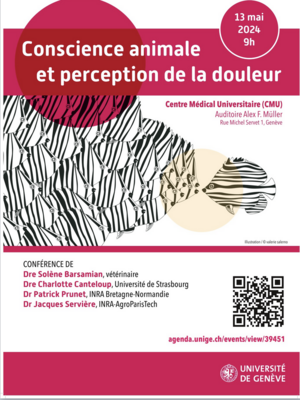
University of Geneva: Organisation of a conference “Animal Consciousness and Pain Perception”, open to researchers and the general public, including a final debate. Link
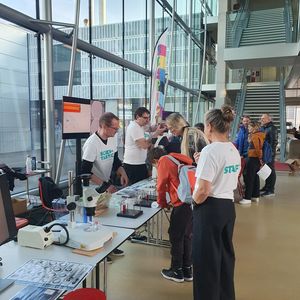
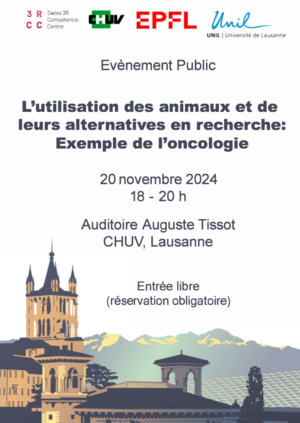
University of Lausanne and the 3RCC:Outreach event organised with the 3RCC. Link
Paul Scherrer Institute (PSI): The Paul Scherrer Institute offers guided tours of its animal facilities to interested individuals. The tours offer insights into the procedures and handling of the animal studies. They also provide students and members of the public with the opportunity to discuss animal experimentation and its role in the development of innovative radioactive drugs for the diagnosis and treatment of cancer.
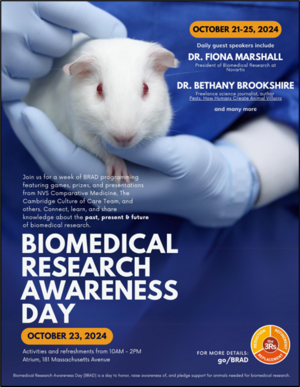
Novartis: BRAD (Biomedical Research Awareness Day) highlights the essential role of animals in biomedical research and reinforces the commitment to animal welfare and the 3Rs. In 2024, Novartis celebrated BRAD during the week of 21 October with presentations on the theme Animal Research – Past, Present, Future.
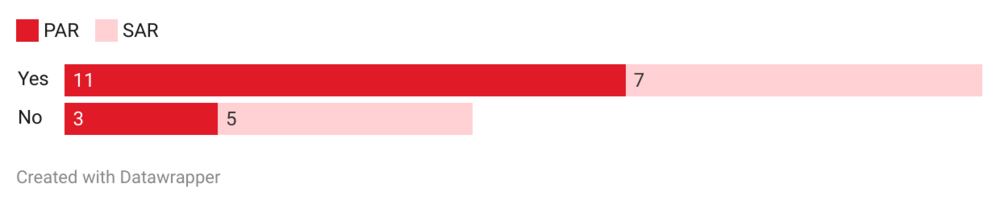
In 2024, a large majority of organisations (18 of 26 compared to 12 of 26 in 2023) published information related to their affiliation with STAAR, including reports, press releases, or website content, demonstrating a clear commitment to transparency. Of the 8 organisations that pursued no such activities (3 PARs and 5 SARs), most indicated an intention to improve in this area.
Focus on 2024 STAAR standards
Standard 1: Publish figures on animal research
This standard encourages transparent reporting on the number and species of animals used in research as well as disclosing information on the severity of procedures. In 2024, transparency improved significantly, with 12 of 14 PARs publishing detailed numbers of animals used in experiments. In addition, 5 PARs shared information on the severity of procedures, evidencing a growing openness in this area. While only 2 PARs currently publish data on breeding and importation, this is nevertheless a foundation on which further transparency can be built. Of the 3 SARs that fund projects involving animal use, one has already taken the step of making relevant data publicly available, reflecting a commitment to openness within its sphere of influence.
Standard 2: Improve communication
This standard promotes dialogue beyond the scientific community and encourages the active use of communication platforms. In 2024, 11 of 14 PARs reported sharing information about animal research on LinkedIn, while SARs had a strong presence on X. In addition, both groups used YouTube, Facebook, and Instagram to expand their digital outreach. The use of Threads by 3 PARs and 1 SAR highlights their willingness to explore new platforms and reach diverse audiences.
Standard 3: Public engagement
This standard reflects a commitment to providing meaningful learning opportunities about animal research. In 2024, organisations demonstrated strong engagement in a variety of outreach formats. Participation in external events such as local presentations was high, with 16 organisations taking part in these events. Similarly, collaboration with local schools was pursued, with 11 respondents, primarily PARs, citing involvement. Participation in open days and community fairs was also solid. While patient-targeted activities and flyer distribution were less common, their inclusion by some organisations illustrates a growing diversification of outreach methods.
Standard 4: Explaining the use of animals in research
This standard encourages clear explanations of why animal research is conducted and in which areas. In 2024, all PARs reported providing information about the research fields in which animals are used at their institution. In addition, several members have begun to share information about sensitive procedures such as euthanasia, a promising step toward more comprehensive transparency in animal research communications (2 PARs and 3 SARs).
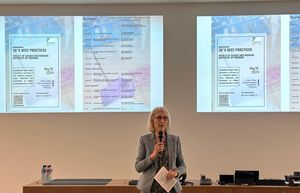
University of Fribourg
Why transparency matters: “Thanks to transparency, the public gains insight into how research is conducted, learns about scientific discoveries, and can engage in informed dialogue.”
Rodents and rabbits (91% of some 4000 animals) are used to study cancer, circadian rhythms, the immune system, Down’s Syndrome, metabolic and cardiovascular diseases, and liver regeneration, to search for treatments for neurological disorders such as multiple sclerosis, and much more. The Unifr also houses a small colony of macaques (0.4%) used in the neuroscience for research into treatments for disorders like stroke, blindness, and spinal cord injury, and for developing visual and motor prostheses.
The Unifr is member of the Swiss Non-Human Primates Competence Center for Research (SPCCR).
STAAR member since 2022 as PAR.
Contact person and/or email: Dr med. vet. Andrina Zbinden
For more information, please visit: www.unifr.ch/go/animals
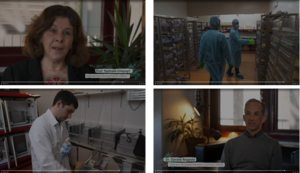
Top left: Prof. Nathalie Ginovart, group leader, department of psychiatry and basic neuroscience. Top right: Rat animal facility of the faculty of medicine (Director: Mr Pierre Bonnaventure). Bottom left: Dr Raphael Goutaudier, postdoctoral research associate. Bottom right: Dr Daniele Roppolo, director of the animal research office
University of Geneva
Why transparency matters: “Transparency regarding the use of animals in research is essential to maintaining a constructive dialogue with the public that respects all sensibilities.”
In 2024, 41% of animals were used in studies on oncology and the immune system, 32% on neuroscience, 14% on metabolism and general physiology; the remaining 13% were distributed across fields such as infectious diseases, fundamental biology and training. Fifty scientific articles using animal models were published by our teams in 2024.
UNIGE uses a wide range of tools to ensure transparency in its activities. For example, in 2024, a conference open to the public addressed the topic of animal consciousness; the use of animals is mentioned in interviews with the media (radio, television, newspapers); UNIGE press releases explicitly mention the animal model when it has enabled the results presented to be obtained. UNIGE's animal facilities have been opened on several occasions: to a team from RTS for the programme ‘Vivants’ and to schoolchildren visiting our facilities. The topic of animal experimentation is addressed both at specific events (Journée du diabète, Les cérébrales) and on the institution's social media accounts. All figures are published annually in the dedicated activity report.
STAAR member since 2022 as PAR.
Contact person and/or E-Mail: Daniele Roppolo
For more information, please visit: https://www.unige.ch/recherche/expanim
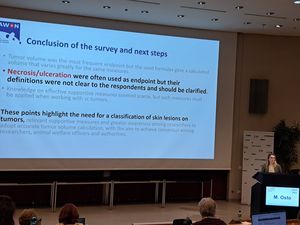
Animal Welfare Officer Network (AWO-N)
Why transparency matters: “Transparency in animal testing is important for building trust in research and enabling an informed public debate.”
The AWO-N is an official partner of the Federal Food Safety and Veterinary Office (FSVO) and is recognized as an expert group in laboratory animal science. In this capacity, the AWO-N develops guidelines for researchers and informs the public about the framework of animal research in Switzerland. The AWO-N also engages in active dialogue with the SAFN, FSVO, and other stakeholders.
The AWO-N supports researchers that need to use animals for their research by providing documents aiming at refinement, e.g., Blood collection guideline, Classification of lesions in subcutaneous tumours in mice.
Members of the AWO-N are all AWOs at research institutions and support researchers in planning their projects and advance animal welfare by critically reviewing projects and suggesting implementation of refinements, well-designed scoresheets and appropriate termination criteria. In addition, they usually act as mediator between researchers and authorities as well as the public.
STAAR member since 2022 as SAR.
Contact person and/or email: Chair of the AWO-N Michaela Thallmair, Vice Chair Björn Lex
For more information, please visit https://sgv.org/en/animal_welfare_officer_network